

Helping Kids Feel Safe, Seen, and Supported
Child and Play Therapy for Ages 4–12 in Fredericksburg, Virginia
Why Play Therapy Works for Children
Children don’t always have the words to explain what they’re feeling — but they show us through behavior, play, and emotion. At Thrive, we offer child and play therapy to help children express themselves, build emotional regulation, and feel safer navigating big feelings, life changes, and relationships.
Our child and play therapy services are provided by Michaela Glowacki and Angélica Guevara-López, along with other therapists trained in integrative, trauma-informed play theray. Sessions take place in person in Fredericksburg, Virginia, in a space designed specifically to help children feel safe, comfortable, and free to express themselves.
What Brings Families to Child Therapy
Parents often reach out when they notice a change — in mood, behavior, school, or friendships. Some of the most common reasons families come to us:
- Anxiety and worry — persistent nervousness, avoidance, physical complaints before school, or difficulty managing uncertainty
- Big emotions and behavioral changes — meltdowns, shutting down, increased frustration or irritability at home
- Low mood — withdrawal, loss of interest in things they used to enjoy, or a sadness that lingers
- Self-esteem — a child who is hard on themselves or struggles to feel good enough
- Friendship and social struggles — exclusion, bullying, or difficulty navigating the shifting social world of school
- School stress and transitions — starting somewhere new, moving to middle school, or adjusting to increased demands
- Family transitions — divorce, a move, a new sibling, or a loss that affects your child's sense of stability
- Trauma and difficult experiences — including medical trauma, hospitalization, or frightening events
You don't need to wait until things feel severe. Many families come to us when something just feels off — and earlier support almost always leads to better outcomes.
How Therapy Looks at Different Ages
Children between four and twelve are at very different stages of growing up, and the way therapy looks shifts with your child's age and needs.
Younger children speak in the language of play, imagination, movement, art, and story. A four-year-old can't sit in a chair and describe their feelings for fifty minutes, and we wouldn't ask them to. Their work happens through sand trays, figures, drawing, and imaginative play — which is not a way of avoiding the work. For young children, it is the work.
Older children, roughly ten to twelve, usually need something different. They've outgrown a room full of toys but aren't yet ready for the way teenagers talk about their lives. Therapy at this age blends approaches — some conversation, some art and expressive work, some practical skill-building. Friend groups reorganize and someone gets left out. Middle school arrives with six teachers, a locker combination, and an expectation of independence nobody explicitly taught. Bodies begin changing on wildly different timelines. A child who never seemed to think about being liked may suddenly think about it constantly.
Wherever your child falls on that spectrum, we'll meet them there.
What Is Play Therapy and How Does It Help Children?
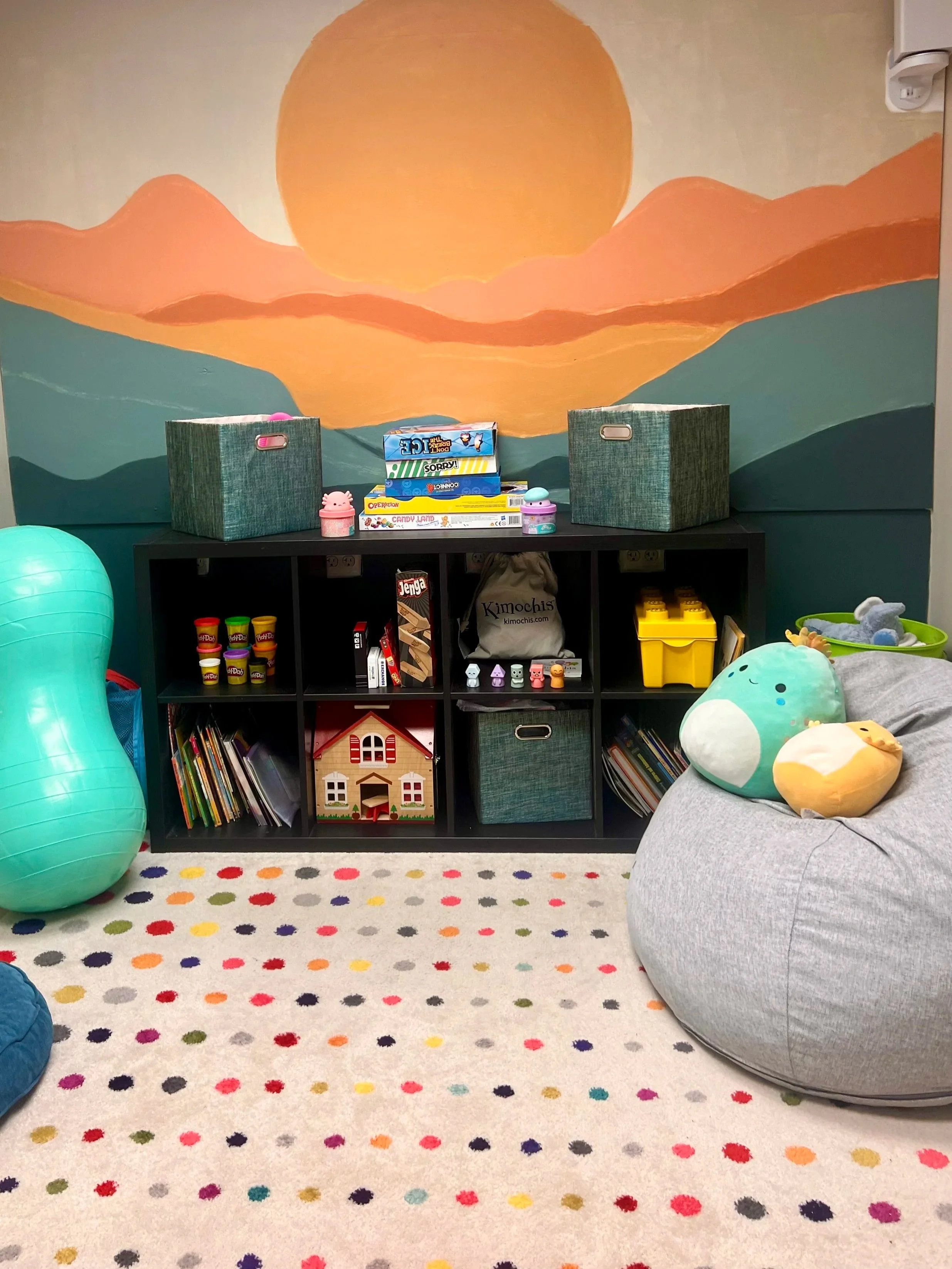
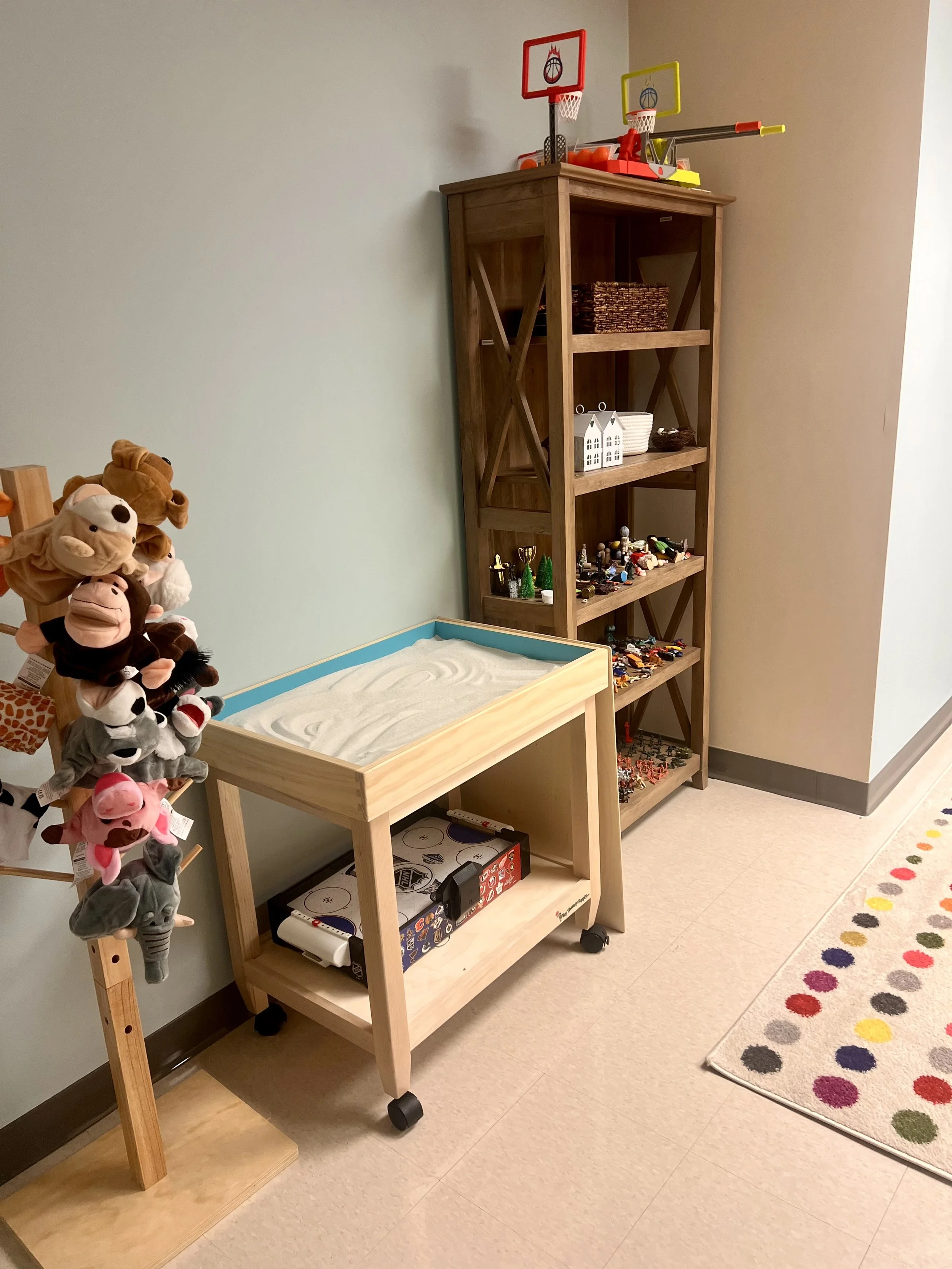
Play therapy provides children with a safe, supportive space to express their thoughts, feelings, and experiences through play — their natural language. Through play, children can explore challenges, build coping skills, and work toward emotional growth and healing at a pace that feels right for them.
Rather than relying on verbal insight alone, play therapy allows children to:
Communicate emotions they may not yet have words for
Practice regulation and problem-solving
Process stress, transitions, or difficult experiences
Build confidence and emotional awareness
Experience connection and safety within the therapeutic relationship
At Thrive, play is intentional, guided, and grounded in evidence-based practice. Play therapy uses toys, games, and creative activities to help children communicate and process experiences in a developmentally appropriate way. Parents and caregivers are supported throughout the process, with guidance on how to strengthen connection, emotional regulation, and understanding at home.
How We Work With Your Child
Our child therapy team includes clinicians with specialized training and supervision in play therapy, working with children ages 4 through 12. Sessions are available in Spanish and English.
Michaela Glowacki, MSW, Supervisee in Social Work — ages 4 and up
Angélica Guevara-López, MSW, Supervisee in Social Work — ages 4 and up, in Spanish or English
Ashley Jordan, MSW, Supervisee in Social Work — ages 8 and up
Crystal Muir, Masters Level Intern — ages 4 and up, with specialized training in play therapy, sandtray, and child-centered play therapy
Our child clinicians work under the supervision of our licensed clinical team. That means your child has a therapist with the time and focus to give them real attention, and a licensed supervisor reviewing their care every week.
Their approach is integrative and flexible, drawing from both child-centered and directive methods depending on what each child needs.ild’s needs.
Sessions may include:
Sand tray work
Art-based and creative activities
Imaginative and symbolic play
Structured interventions informed by Cognitive Behavioral Therapy (CBT)
Therapeutic processes utilizing Child-Centered Play Therapy (CCPT)
This adaptability allows therapy to meet each child exactly where they are — supporting creativity while also fostering emotional insight, coping skills, and regulation.
Therapy Structure & Session Frequency
All new child clients are seen weekly during the initial phase of therapy. This consistency helps build:
Rapport and trust
Emotional safety
Predictability and containment
As therapy progresses, session frequency may be adjusted based on your child’s needs and therapeutic goals.
Partnering with Parents & Caregivers
Because connection is the foundation of what we do, you're not on the sidelines of your child's therapy — you're central to it. Your child goes home to you. The relationships in their daily life are far more powerful than one hour a week with us.
That's why we build in regular parent sessions, held separately from your child's sessions. These are where we share general themes from treatment, offer guidance on supporting your child at home, and hear what you're noticing. They give you practical tools while protecting the relationship your child is building with their therapist.
We also ask you to complete a brief Parent Weekly Form. It's quick, you can fill it out from home or while your child is in session, and it gives your child's therapist a window into the week from your point of view. The more we know about what you're seeing, the better we can help.
When it's clinically useful, we offer family sessions focused on specific goals — strengthening communication, helping your child learn to advocate for themselves, or supporting your family through a transition together.
One note as children grow: younger children usually want you fully looped into everything, while older children — especially approaching the teen years — often begin wanting a little space of their own in therapy. That's healthy, and we handle it with care. You'll always stay informed about how your child is doing and how to support them. A child who feels their therapist is truly their safe person, rather than an extension of their parents, is a child who can do the real work.
We believe in engaging both parents.
When a child has two parents or caregivers involved in their life, the child is best served when both are engaged to whatever degree is possible. Children take in the relationships around them, and when
What Changes When Children Do This Work
Children don’t always have words for what they’re feeling. Play therapy gives them a language they can actually use — and what comes through it often surprises parents.
Parents describe their child differently after consistent play therapy. Less reactive. Able to name more big feelings rather than just acting them out. Sleeping better. Relating to siblings or classmates differently. More settled in their body and their behavior.
Some of the changes are visible quickly. Others build slowly over months — a child who once melted down at every transition gradually developing the internal resources to handle what used to overwhelm them.
We also work closely with parents throughout the process — because the changes that happen in the therapy room need to be supported at home. The relationship between you and your child is part of what we’re building.
Children are more resilient than we often give them credit for. They heal quickly when given the right environment. That’s what we create here.
"But Is It Actually Helping?"
This is the question parents ask us most, and it's completely fair. When the work looks like play, it can be genuinely hard to tell whether progress is happening — you're not in the room, and the changes are often quiet before they're obvious.
Here's what we want you to know. Progress in child therapy often doesn't look like the thing you came in hoping to fix getting better first. It looks like your child naming a feeling, recovering from a meltdown a little faster, sleeping a little better, or simply seeming a bit more like themselves.
And sometimes—this surprises many parents—things look bumpier before they look better. A child who finally feels safe enough to let their big feelings out may have a stretch of bigger feelings at home. That's usually not the therapy failing. It's often a sign your child is beginning to trust the process. We'll help you understand what you're seeing, and we want your questions about it.
When Parents Aren't on the Same Page
Sometimes the hardest part of parenting a struggling child isn't the child — it's that the two of you see it differently. One of you thinks there's too much leniency, the other thinks there's too much pressure, and the disagreement becomes its own strain.
That's common, and it's workable. Our sister practice, We Thrive Together, offers parenting-as-partners work for couples who want to get aligned on how they're raising their kids. Some families do both: individual therapy for their child here, parenting work alongside it.
Learn more about parenting as partners → We Thrive Together Parenting as Partners
Evidence Based Practices used with Children at Thrive

-
CBT-informed play therapy blends evidence-based cognitive behavioral strategies with play-based activities that are developmentally appropriate for children. Through games, stories, art, and structured play, children learn to recognize emotions, understand thoughts, and practice healthy coping skills in a way that feels engaging and supportive.
This approach helps children manage anxiety, big emotions, behavioral challenges, and negative self-talk by teaching practical tools they can use at home and at school. Skills are introduced gently and creatively, allowing children to build confidence, emotional awareness, and problem-solving abilities at their own pace.
-
Child-centered play therapy gives children the freedom to express themselves through play at their own pace, in a safe and accepting environment. In this approach, the therapist follows the child’s lead, allowing them to explore feelings, experiences, and challenges in their natural language of play.
Through consistent, supportive presence, children build emotional awareness, self-confidence, and a stronger sense of safety. This approach is especially helpful for children who struggle to put feelings into words or who have experienced stress, transitions, or emotional overwhelm.
-
Sand tray therapy allows children to express thoughts, feelings, and experiences through symbols and storytelling rather than words. Using miniature figures and a tray of sand, children create scenes that reflect their inner world in a way that feels safe, natural, and engaging.
This approach helps children process emotions, explore challenges, and make sense of experiences they may not yet be able to verbalize. Sand tray work supports emotional regulation, insight, and healing while allowing the therapist to gently guide the process based on the child’s needs and developmental level.
-
Emotional regulation skills help children learn how to recognize, name, and manage big feelings in their bodies. Through play-based activities, games, and creative exercises, children practice calming strategies such as breathing, grounding, and problem-solving in ways that feel approachable and age-appropriate.
These skills support children in managing anxiety, frustration, impulsivity, and emotional reactivity—helping them feel more in control, confident, and capable both in therapy and in everyday life.
-
Parent-child sessions are an important part of the therapeutic process and are offered regularly to support connection and carryover outside the therapy room. These sessions allow parents and caregivers to better understand their child’s emotional needs while learning practical tools to support regulation, communication, and connection at home.
During parent-child sessions, the therapist may share themes observed in play, offer guidance on emotional support strategies, and help strengthen the parent-child relationship in a way that feels collaborative, respectful, and empowering.
Questions About Play Therapy in Fredericksburg, VA
Thinking about play therapy for your child? Here are answers to the questions parents ask us most.
-
As a parent, watching your child struggle and not knowing how to help is one of the hardest feelings there is. Children often show us they're struggling through behavior, big emotions, or changes in mood — long before they have words for what they're feeling. Play therapy in Fredericksburg may be a good fit if your child is experiencing anxiety, emotional outbursts, behavioral changes, difficulty with transitions, or challenges at home, school, or in friendships. You don't have to wait until things feel overwhelming to reach out. Early support helps children build skills, feel safer, and develop emotional tools they'll carry for life.
-
We typically see new clients weekly, especially at the start of therapy. Consistency matters most in the early weeks — it's how your child builds trust with their therapist, settles into the rhythm of sessions, and begins to feel safe enough to do real work. Think of it like learning any new skill — regular practice makes the difference. Sessions are 45-60 minutes and take place in person at our Fredericksburg, VA office. One thing parents sometimes wonder about is scheduling — we intentionally offer play therapy during daytime hours. We know pulling a child out of school isn't always easy, but there's a real clinical reason behind it. Children who come to therapy earlier in the day are more available emotionally — they haven't yet spent hours navigating the social and academic demands of a school day. A child who arrives fresh is better able to engage, connect, and do meaningful work than one who arrives exhausted at the end of the day. Many schools are supportive of therapy appointments when parents communicate openly with them. As therapy progresses, session frequency may shift to every other week or as needed. Life happens — if you need to reschedule occasionally that's okay. What matters most is showing up consistently enough that your child feels the relationship is reliable and safe.
-
Your role is more important than you might think — and it starts before your child ever walks into the therapy room. At our Fredericksburg practice, we believe parents and caregivers are essential partners in the therapeutic process, not observers waiting on the sidelines. You know your child better than anyone, and that knowledge shapes how we work. Every 4-6 weeks, your child's therapist will meet with you separately for a parent session. This is a space to discuss general themes from your child's sessions, talk through what you're noticing at home and at school, and give you practical tools to support your child's growth between sessions. We never share the specific details of your child's play — that privacy is important for building trust — but we make sure you feel informed, supported, and equipped to help your child outside the therapy room. One thing we want every parent to know: coming to therapy doesn't mean you've failed your child. It means you're paying attention. The parents who seek support for their children are some of the most thoughtful, committed caregivers we work with — and we're honored to partner with you.
-
It's completely natural to want to know — you love your child and want to understand what they're experiencing. Here's how we handle it at our Fredericksburg practice. Your child's therapist will share general themes, overall progress, and any recommendations that are relevant to supporting your child at home and at school. What we don't share are the specific details of your child's play, art, or conversations — and there's an important reason for that. Children open up most when they feel their therapy space is truly their own. Knowing that what happens in the room stays private gives them the freedom to explore, express, and heal without worrying about what their parents will think or say. You will always be informed if there is ever a safety concern — that is never kept from you. The goal is a balance that keeps you appropriately informed and supported while giving your child the private, sacred space they need to do their best work.
-
This is one of the most common questions we hear — and an honest one. Every child is genuinely different, so we can't give a universal answer. That said, here's what we can tell you. Some children come to play therapy at our Fredericksburg office for a focused period of 3-6 months to work through a specific challenge — a family transition, a bout of anxiety, or a difficult experience. Others benefit from longer term support, particularly when working through trauma, complex emotions, or deeper relational patterns. What we can promise is that we never keep a child in therapy longer than is clinically meaningful. Progress is reviewed regularly with you, goals are adjusted as your child grows, and we will always be transparent with you about where your child is in their therapeutic journey. If you ever have questions about your child's progress or timeline, you can always ask — that conversation is always welcome.
-
This is more common than you might think — and it doesn't mean therapy won't work. Many children arrive at our Fredericksburg office feeling unsure, reluctant, or even openly resistant. Some say they don't want to be there. Some sit quietly and watch. Some test boundaries to see if this space is really safe. All of that is okay and expected. Our therapists are specifically trained to work with children who are hesitant or resistant. We never force conversation or participation — instead we focus entirely on building safety, trust, and connection first. Play, art, and creative activities give children a way to engage at their own pace without feeling put on the spot. Most children who arrive resistant become some of our most engaged clients once they realize the therapy room is genuinely their space — a place with no wrong answers, no grades, and no pressure. If your child is anxious about starting, you can reassure them that they won't be forced to talk about anything they don't want to. They just get to play.
-
Yes. Thrive Counseling accepts most major insurance plans including Anthem BCBS, Aetna, United Healthcare, and most Medicaid products for child and play therapy services. We offer superbills for those with Out of Network Benefits. Sessions are available in person at our Fredericksburg, Virginia office. Contact us to get started.
-
Yes. Play therapy at Thrive is particularly effective for children navigating anxiety, trauma responses, behavioral changes, and emotional dysregulation. Michaela's integrative approach allows her to meet each child exactly where they are — using play, sand tray, art, and evidence-based techniques to help children process difficult experiences in a way that feels safe and developmentally appropriate. Sessions are in person in Fredericksburg, Virginia.